
Download Flood the Chamber – Platformer, Retro, Challenge, Precision, Water Rising
Overview
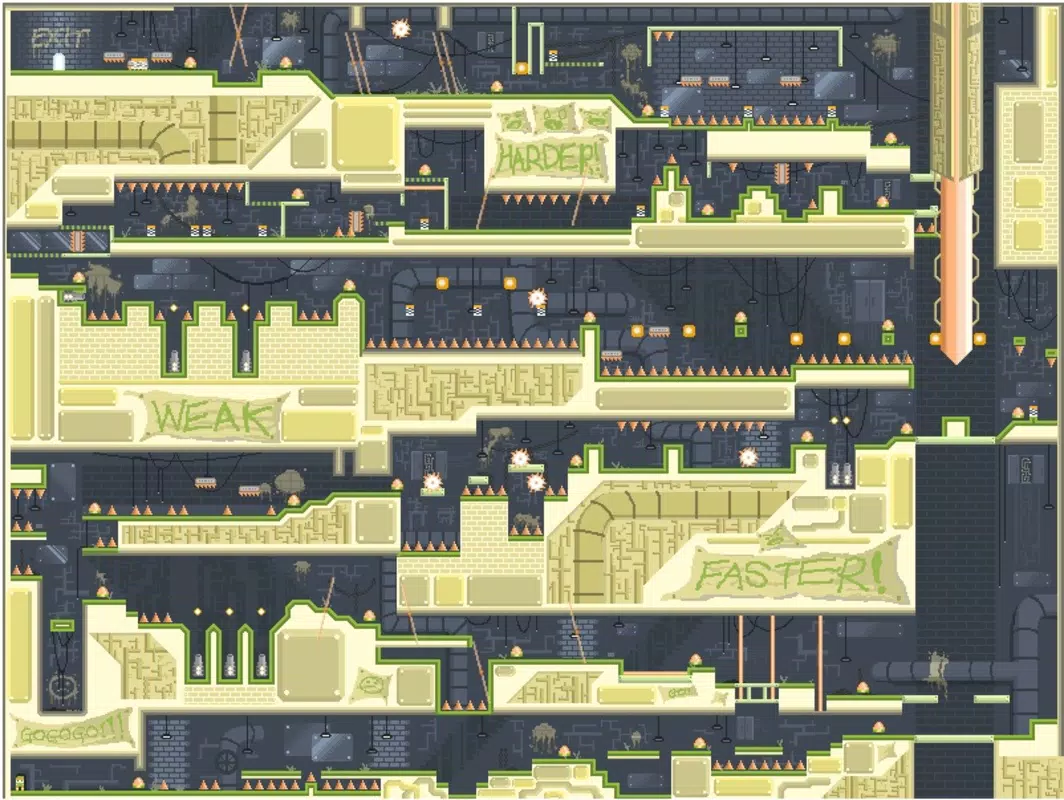
Flood the Chamber delivers a high-stakes, single-level platforming experience designed for players who thrive on difficulty and perseverance. The game places the player in a vast, unforgiving dungeon where the central mechanic—rising water—creates constant pressure to progress. As the water level climbs steadily, every misstep risks submersion and a complete restart, turning each attempt into a test of reflexes, timing, and mental endurance. This design targets fans of retro platformers who appreciate games that prioritize challenge over hand-holding, particularly those drawn to titles like I Wanna Be the Guy. The game’s purpose is not just entertainment, but emotional engagement through frustration and triumph. It challenges players to master intricate sequences, adapt to unpredictable traps, and push through repeated failures. The solitary level structure encourages long, focused sessions, reinforcing the idea that mastery comes through repetition and observation. Though the developer did not provide additional background, the game’s mechanics suggest a deliberate, minimalist design philosophy. In the broader mobile gaming ecosystem, Flood the Chamber stands out as a niche but impactful title, offering a pure platforming experience that emphasizes skill over complexity. Its relevance lies in its ability to deliver intense, concentrated gameplay in a compact, self-contained format.Key Features & Functionality
The game’s core identity rests on four defining mechanics that shape every moment of gameplay. First, the single-level challenge ensures that players engage with one continuous, expansive dungeon. This design eliminates loading screens and resets the focus entirely on persistence, making each run a personal journey toward mastery. Second, the rising water mechanic introduces a dynamic time pressure. Unlike static hazards, the water level advances consistently, forcing players to make quick decisions and execute precise movements under duress. Third, the precision platforming required demands exact timing and control. Many jumps are narrow, require split-second inputs, and are often followed by sudden traps—making each movement a calculated risk. Fourth, the retro game feel pays homage to classic 2D platformers with minimalist visuals, tight controls, and a lack of tutorial guidance. This aesthetic choice enhances the sense of challenge and authenticity. Real-world use cases include players seeking a mental workout, practicing hand-eye coordination, or reliving the nostalgic tension of early 2000s indie platformers. The game rewards patience and attention, turning each failed attempt into a learning opportunity. These features collectively create a gameplay loop centered on repetition, adaptation, and eventual breakthrough.How the Features Work Together
The rising water and precision platforming are interdependent—each misstep increases the risk of drowning, which in turn raises the stakes of every jump. The single-level design amplifies this tension, as players cannot skip sections or save progress. The retro feel reinforces the game’s minimalist philosophy: no menus, no instructions, no shortcuts. This combination creates a focused, immersive experience where every action matters. Players must memorize patterns, anticipate trap triggers, and refine their timing over multiple attempts. The result is a gameplay loop that is both punishing and deeply satisfying when overcome.Interface, UX & Performance
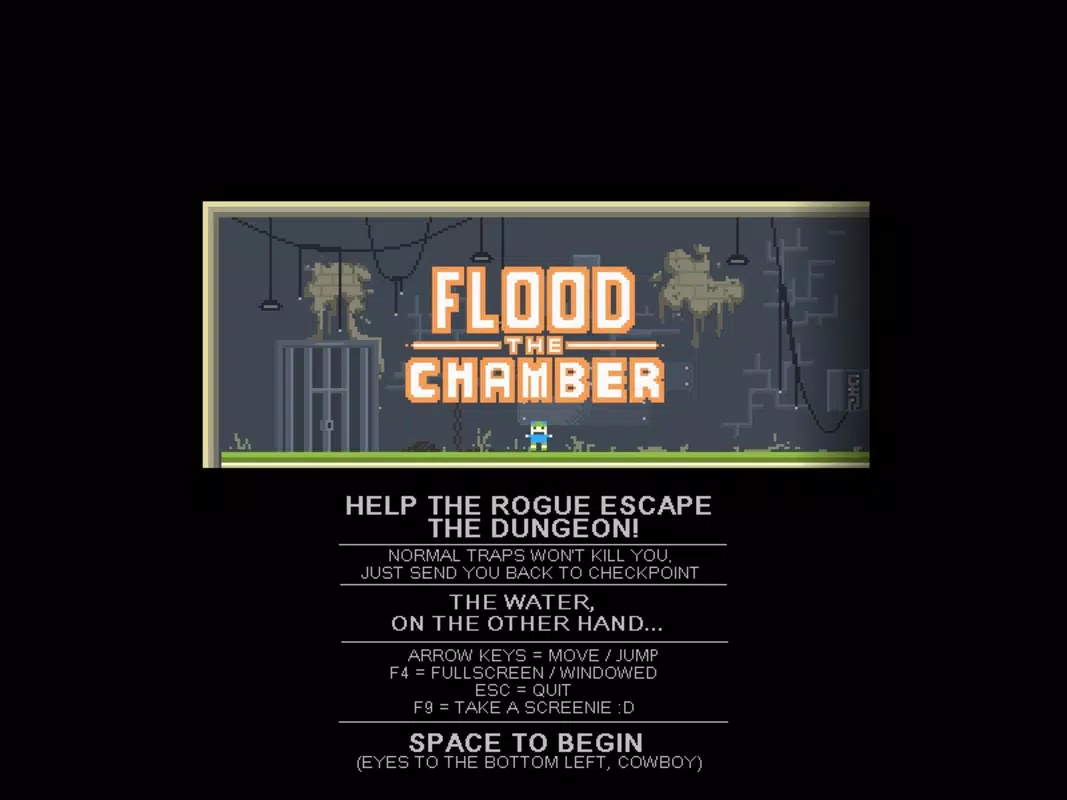
The interface of Flood the Chamber is intentionally minimal, aligning with its retro aesthetic and single-level focus. There are no menus, HUD elements, or progress indicators—only the player character, the environment, and the rising water. This design reduces visual clutter and keeps attention on the core challenge. Navigation is straightforward: players use directional controls to move and jump, with no complex input systems. The visual style features simple, blocky graphics and a limited color palette, evoking classic 2D platformers. Although the developer did not list formal performance metrics, the game’s design suggests it runs efficiently on a range of devices. Responsiveness is critical, given the precision required, and the controls appear to react immediately to input. Stability is implied by the game’s long-standing presence since 2013, though no official updates have been documented. The lack of loading screens or transitions enhances flow, maintaining momentum between attempts. While specific device compatibility was not disclosed, the lightweight nature of the game indicates broad accessibility. The absence of in-app purchases or ads supports a clean user experience. Overall, the UX is purpose-built for one goal: to deliver a relentless, uninterrupted platforming challenge.Platform Compatibility & Technical Requirements
Flood the Chamber is available on Android and iOS platforms, though specific OS versions and device compatibility were not listed by the developer. The app size is approximately 15.6 MB, suggesting a lightweight footprint suitable for most modern smartphones. The software version is 1.0, indicating a stable, unupdated release since its 2013 launch. No formal requirements were provided, so users should ensure their device supports basic 2D game rendering and touch controls. The developer did not specify minimum OS requirements, nor did they mention support for tablets or specific hardware features. While the game has remained unchanged for over a decade, its simplicity may allow it to run on older devices. However, users should verify compatibility with their specific system before attempting installation. The lack of recent updates suggests the game is not actively maintained, but its core functionality remains intact.Pros and Cons
- Single, immersive level promotes deep focus and persistence
- Rising water mechanic adds urgency and tension
- High precision platforming rewards skill and repetition
- Minimalist design enhances retro feel and gameplay clarity
- Lightweight file size ensures easy download and storage
- No in-app purchases or ads, but also no updates or improvements
- Minimal UI may confuse new players unfamiliar with retro style
- One-level design may feel repetitive for some users
- Outdated version and lack of support may cause compatibility issues
- No save or checkpoint system increases frustration


